All Features on Every Plan. No Lock-In.

ActiveCampaign vs Klaviyo

A side-by-side comparison for teams choosing between ActiveCampaign and Klaviyo.

Last updated: December 16, 2025

Screenshot
vs
Screenshot

Quick Overview

General-purpose automation depth vs ecommerce-first data activation

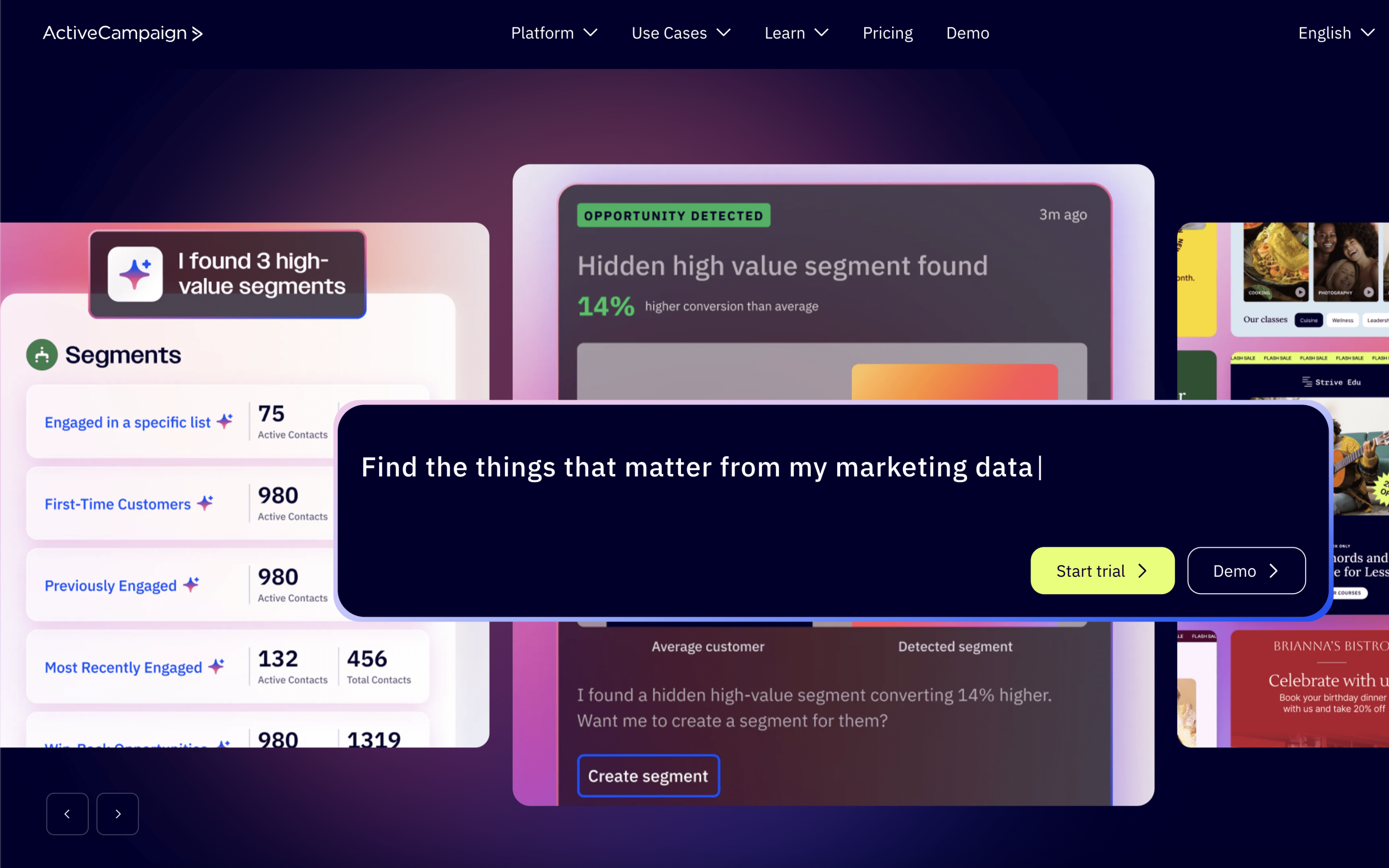
The biggest difference between ActiveCampaign and Klaviyo is what they optimize for: ActiveCampaign is built as a broad marketing automation engine that can orchestrate cross-channel journeys and tie into sales workflows (including a built-in CRM), while Klaviyo prioritizes turning real-time customer data into highly personalized lifecycle messaging. In practice, ActiveCampaign leans toward flexible journey design across many contexts, while Klaviyo leans toward data-driven relevance anchored in customer behavior.

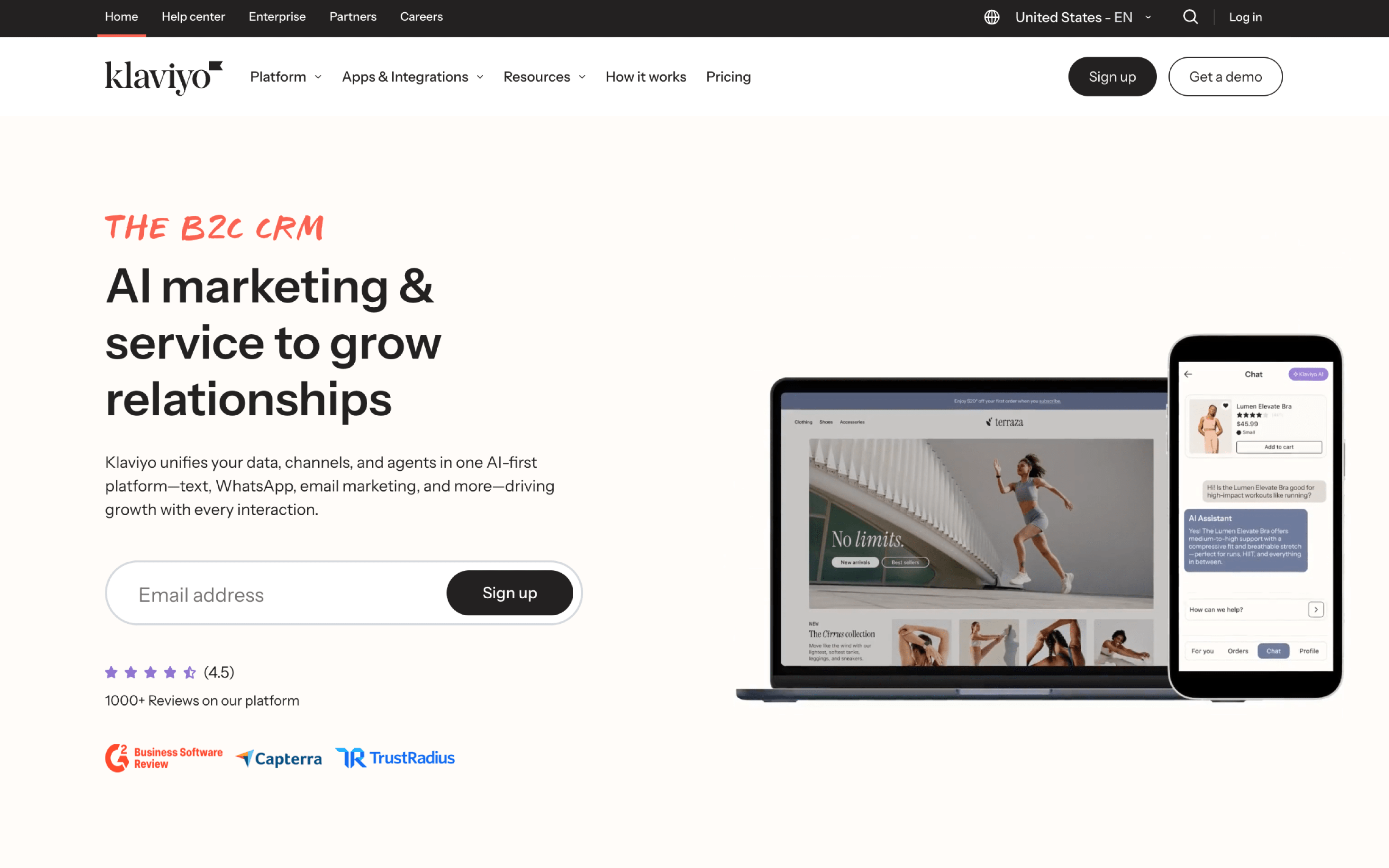
That tradeoff exists because both platforms made different product bets. ActiveCampaign positions itself as an autonomous marketing platform focused on goal-aware automations and AI-guided execution, which pushes the product toward a powerful automation layer that can sit across a wider stack. Klaviyo, by contrast, frames its platform around a built-in customer data platform and B2C CRM approach, designed to unify zero- and first-party data and keep profiles updating in real time—so targeting and triggers stay tightly coupled to customer activity.

For buyers, the stakes show up in how your system behaves as complexity increases: whether your growth motion depends more on configurable, branching automations and workflow orchestration, or on consistently activating unified customer profiles in real time to keep personalization accurate. The rest of this comparison unpacks how that difference impacts automation depth, omnichannel coordination, data centralization, operating overhead, and how quickly teams can iterate without breaking reporting or segmentation integrity.

Quick Comparison

At a Glance

Category ActiveCampaign Klaviyo
Best for Small-medium business marketing teams Ecommerce brands email and SMS
Core strength Marketing automation with built-in CRM Customer data platform segmentation
Automation depth CRM pipelines and automations Cross-channel flows and webhooks
Pricing model Tiered plans by contacts Tiered plans by contacts
Learning curve Site tracking and setup steps Connect store and sync data

Vendor Snapshot

Company Snapshot

Background data gathered from our market research (founding year, HQ, team size, specialties, etc.).

ActiveCampaign

Visit website
A
Team 1001-5000
HQ
Chicago, IL, USA
Team
1001-5000
Industry
Software Development

ActiveCampaign is an AI-first autonomous marketing platform that helps marketers, agencies, and entrepreneurs run cross-channel campaigns. It supports automated, personalized experiences across email, SMS, and WhatsApp with integrations across 1,000+ apps.

Specialties

Autonomous Marketing Marketing Automation
K
13+ years operating Team 1001-5000
Founded
2012
HQ
Boston, MA, USA
Team
1001-5000
Industry
Marketing Services

Klaviyo is the AI-first B2C CRM. Powered by a built-in data platform and AI, it unifies marketing automation, analytics, and customer service to help B2C brands deliver 1:1 experiences at scale and grow revenue.

Why These Platforms Feel So Different

ActiveCampaign emerged from the marketing automation and sales workflow world, where contact management and follow-up had to stay tightly linked. Klaviyo emerged from ecommerce, where the first hard problem was turning store activity into timely messages. Those starting points pushed one toward a workflow engine and the other toward commerce event capture.

Because ActiveCampaign was built to connect marketing actions with sales process, it prioritizes a unified record and automation logic across functions. This leads to a tradeoff in setup overhead, since you often model pipelines, fields, and rules before outcomes appear. You can see this in its built-in CRM and sales pipeline capabilities that sit alongside messaging workflows.

Because Klaviyo was built around ecommerce data and purchase behavior, it prioritizes fast ingestion of store events into customer profiles. This leads to a tradeoff in how much the product assumes a commerce-centric data shape for identity and tracking. You can see this in how it centers its platform around a built-in data layer and unified customer profiles for marketing, service, and analytics.

These origins explain why the two products make different default assumptions about what matters most in day-to-day operation. The next sections show how those assumptions surface as practical differences once you start implementing real programs.

Key Takeaways

Key Differences

ActiveCampaign and Klaviyo differ most in target market, core data foundations, automation approach, and how they connect marketing to revenue outcomes.

Market focus

SMB automation vs ecommerce-first

ActiveCampaign is built for broad SMB marketing and sales workflows, while Klaviyo is optimized for ecommerce and retail lifecycle marketing.

Core platform

Sales CRM vs marketing CRM

ActiveCampaign includes a sales pipeline CRM layer, while Klaviyo centers on a customer data and messaging CRM for commerce audiences.

Data model

General contact data vs commerce events

ActiveCampaign organizes around contacts and engagement, while Klaviyo prioritizes real-time behavioral and purchase events for segmentation and triggers.

Automation model

Flexible workflows vs lifecycle flows

ActiveCampaign emphasizes highly customizable multi-step automations, while Klaviyo focuses on lifecycle flows tied to customer and shopping behavior.

Integrations

Broad integrations vs store-native stack

ActiveCampaign targets wide third-party app coverage, while Klaviyo is designed to plug deeply into ecommerce platforms and adjacent tools.

Reporting

Engagement metrics vs revenue attribution

ActiveCampaign reporting leans toward campaign and automation performance, while Klaviyo highlights revenue attribution and ecommerce-centric analytics.

Feature Comparison

Feature-by-feature comparison

Compares core messaging, automation, data, reporting, and go-to-market capabilities.

Email marketing

Build and send email campaigns with personalization tools.

ActiveCampaign

Email campaigns with AI assistance and advanced personalization.

Klaviyo

Drag-and-drop email editor with templates, personalization, and AI.

SMS marketing

Create, send, and automate SMS campaigns.

ActiveCampaign

SMS automation available, including AI SMS builder.

Klaviyo

Built-in SMS marketing with two-way conversations and global coverage.

WhatsApp messaging

WhatsApp channel support for messaging automation.

ActiveCampaign

WhatsApp messaging supported for personalized, automated campaigns.

Klaviyo

WhatsApp included for omnichannel marketing automation.

Marketing automation

No-code workflows triggered by customer behavior.

ActiveCampaign

Automation builder with AI-suggested automations and actions.

Klaviyo

Automated flows across email, SMS, push, and integrated channels.

Segmentation

Create audiences using behavioral and profile data.

ActiveCampaign

AI-suggested segments with behavioral targeting and personalization.

Klaviyo

Advanced segmentation using real-time, behavioral, and predictive data.

CRM and pipelines

Built-in CRM for sales workflows and deal tracking.

ActiveCampaign

Built-in CRM supports pipeline management, lead scoring, sales automation.

Klaviyo

Forms

On-site forms for lead capture and data collection.

ActiveCampaign

Drag-and-drop forms for inline and pop-up style capture.

Klaviyo

Web forms builder for pop-up, fly-out, and embedded forms.

Customer data platform

Unified customer profiles and real-time data activation.

ActiveCampaign

Site and event tracking supports behavior-based targeting.

Klaviyo

Built-in Klaviyo Data Platform updates customer profiles in real time.

Reporting and dashboards

Measure performance with reports and analytics.

ActiveCampaign

AI agents support reporting insights and performance analysis.

Klaviyo

Reporting dashboards with custom reports and scheduled delivery.

Integrations ecosystem

Prebuilt integrations and APIs for connected stacks.

ActiveCampaign

App marketplace with 1,000+ integrations.

Klaviyo

350+ integrations plus APIs for centralized data activation.

Feature Analysis

Feature Explanation: How These Capabilities Differ in Practice

You’ve already seen which boxes each platform checks. This section explains how the key features behave day-to-day, and where the real workflow differences show up.

#1 Automation & Flows

ActiveCampaign uses a visual automation builder with branching logic, including split and conditional actions inside a single automation.

Klaviyo’s flows are built around event- and milestone-based triggers (like browse/cart/order) with split logic for branching paths.

#2 Customer Segmentation

ActiveCampaign supports dynamic segments that auto-update based on set criteria, such as recent email engagement.

Klaviyo segments update in real time, and can use all-time event history plus predictive attributes like churn risk and CLV.

#3 Multichannel Messaging

ActiveCampaign supports orchestrating messages across email, SMS, WhatsApp, and other channels within automations.

Klaviyo runs omnichannel journeys across email, SMS, mobile push, and WhatsApp, using unified customer profiles and triggers.

#4 Experimentation / Testing

ActiveCampaign can split-test automation paths to compare routes, timing, and channel choices within a workflow.

Klaviyo supports A/B testing for campaigns and for emails inside flows, including testing content and send times.

#5 Ecommerce Integrations

ActiveCampaign offers a Shopify integration aimed at re-engagement automations like upsells, cross-sells, reviews, and abandoned cart follow-ups.

Klaviyo is built to connect with ecommerce platforms and unify store and tool data through 350+ integrations for activation in flows and segments.

#6 Analytics & Attribution

ActiveCampaign supports attribution-related tracking through integrations that capture UTMs and landing-page data onto contacts.

Klaviyo provides reporting dashboards and flexible attribution settings that can be adjusted and applied retroactively.

Pricing

Pricing & Plans

Compare tiers, caps, and upgrade paths at a glance.

ActiveCampaign

Tiered Volume pricing

Public tiered pricing is shown up to 50,000 contacts, with larger volumes listed as contact sales.

Klaviyo

Tiered Volume pricing

Public tiered pricing is available through 100,000 contacts, with higher tiers listed as contact sales.

1,000 contacts

PLAN

$19

per month

What's included

  • Includes 10,000 emails
  • Email campaigns and newsletters
  • Marketing automation workflows
  • Templates and forms

Limitations

  • Monthly email sends are capped at 10,000 on this tier.

PLAN

$30

per month

What's included

  • Includes 10,000 emails
  • Email marketing based on contact tier
  • Segmentation and subscriber management
  • Integrations with third-party tools

Limitations

  • Monthly email sends are capped at 10,000 on this tier.
10,000 contacts

PLAN

$189

per month

What's included

  • Includes 100,000 emails
  • Email marketing to up to 10,000 contacts
  • Automation builder for multi-step workflows
  • Reporting and segmentation tools

Limitations

  • Monthly email sends are capped at 100,000 on this tier.

PLAN

$150

per month

What's included

  • Includes 100,000 emails
  • Email marketing for mid-sized lists
  • Audience segmentation
  • Performance reporting

Limitations

  • Monthly email sends are capped at 100,000 on this tier.
50,000 contacts

PLAN

$759

per month

What's included

  • Includes 500,000 emails
  • Scaled email marketing for larger lists
  • Automation across customer lifecycle stages
  • Integrations ecosystem support

Limitations

  • Monthly email sends are capped at 500,000 on this tier.

PLAN

$720

per month

What's included

  • Includes 500,000 emails
  • Scaled sending for larger audiences
  • Automation and campaign workflows
  • Broad integrations support

Limitations

  • Monthly email sends are capped at 500,000 on this tier.
100,000 contacts

PLAN

Contact sales

What's included

  • Custom pricing at higher volumes
  • Support for high-scale lifecycle automation
  • Larger-account purchasing process

Limitations

  • Pricing is not publicly listed at this volume (sales-assisted purchase required).

PLAN

$1,380

per month

What's included

  • Includes 1,000,000 emails
  • High-volume sending capacity
  • Advanced segmentation for large lists
  • Website visitor tracking (where implemented)

Limitations

  • Monthly email sends are capped at 1,000,000 on this tier.
500,000 contacts

PLAN

Contact sales

What's included

  • Custom pricing for very large databases
  • Operational alignment for large-scale sending
  • Sales-led contracting process

Limitations

  • Custom contract/pricing required (not self-serve).

PLAN

Contact sales

What's included

  • Custom pricing at enterprise volumes
  • Sales-led contracting and account setup
  • Operational planning for large-scale programs

Limitations

  • Pricing is not publicly listed at this volume (sales-assisted purchase required).
1,000,000 contacts

PLAN

Contact sales

What's included

  • Enterprise-scale account sizing
  • Custom commercial terms
  • Sales-led onboarding and contracting

Limitations

  • Requires contacting sales and negotiating a custom agreement.

PLAN

Contact sales

What's included

  • Enterprise-scale list support
  • Custom commercial terms
  • Sales-led onboarding and procurement support

Limitations

  • Requires contacting sales and negotiating a custom agreement.

Customer Voices

Reviews & Ratings

See how ActiveCampaign vs Klaviyo compare based on verified customer reviews (pros, cons, sentiment).

ActiveCampaign

4.6 / 5.0

Based on 2,545 reviews

Positive sentiment
Top Pros
  • Powerful automation that saves time
  • Segmentation and tagging feel very flexible
  • Lots of integrations with other tools
  • Onboarding help and resources are solid
Top Cons
  • Steep learning curve to use advanced features
  • Bugs and glitches disrupt work
  • Page and form builder feels limited
  • Can be slow, especially when saving edits

Klaviyo

4.6 / 5.0

Based on 512 reviews

Positive sentiment
Top Pros
  • Segmentation makes targeting feel effortless
  • Automations and flows are easy to build
  • Strong Shopify and ecommerce integrations
  • Analytics and performance views are helpful
Top Cons
  • Pricing feels high and confusing
  • Costs rise fast as lists grow
  • Occasional glitches and slowdowns in editor
  • Some analytics require paid add-ons

Real-World Scenarios

How ActiveCampaign and Klaviyo behave in real workflows

A feature grid shows what’s available, but day-to-day work depends on how each platform behaves under real deadlines, handoffs, and ongoing adjustments.

#1 Lifecycle automation cadence

ActiveCampaign: Teams set ongoing journeys that run daily, with frequent tweaks during reviews and smooth handoffs when multiple people update the same workflow.

Klaviyo: Teams run recurring lifecycle bursts tied to store activity, adjusting sequences weekly around launches while keeping edits focused on revenue-driving messages.

#2 Audience targeting and segmentation rhythm

ActiveCampaign: Segments evolve through ongoing list maintenance, with teams revisiting rules during campaigns and coordinating handoffs when sales and marketing both update audiences.

Klaviyo: Segments refresh continuously from shopping behavior, letting teams pivot daily when products change and reducing back-and-forth on who qualifies for each send.

#3 Multichannel coordination and timing

ActiveCampaign: Workflows coordinate touches across recurring outreach, where timing adjustments happen during weekly planning and teams track handoffs between nurture and follow-up.

Klaviyo: Messaging coordinates around commerce moments in bursts, with teams syncing timing to promotions and updating cadence quickly when inventory or demand shifts.

#4 Sales and marketing handoffs

ActiveCampaign: Teams manage ongoing handoffs by routing leads into recurring follow-ups, with weekly alignment to keep outreach consistent when ownership changes.

Klaviyo: Teams keep focus on purchase-driven communication, with fewer cross-team handoffs and faster daily adjustments when customer intent changes.

#5 Reporting visibility and iteration loop

ActiveCampaign: Reporting supports a steady weekly review loop, where teams compare journeys over time and make incremental adjustments without rebuilding core workflows.

Klaviyo: Reporting drives rapid iteration in recurring cycles, with teams checking results daily during campaigns and adjusting sends quickly to match performance swings.

#6 Data updates and list hygiene operations

ActiveCampaign: Teams run ongoing cleanup and field updates, coordinating recurring processes so contact records stay usable across multiple workflows and handoffs.

Klaviyo: Teams rely on continuous commerce-driven updates, spending less time on manual hygiene and more time adjusting messaging cadence as behaviors change.

Decision Guide

Which Platform Should You Choose?

Use these cues to quickly see which platform fits how you work.

ActiveCampaign

Best for

Teams running a mixed marketing-and-sales motion where follow-up, handoffs, and ongoing lifecycle tuning happen side-by-side.

This platform is a good fit if:

  • You manage both leads and customers, and the work regularly shifts between nurturing and direct follow-up.
  • Your team reviews engagement and pipeline movement together, then adjusts next steps based on what happens.
  • Workflows depend on clear internal handoffs (who owns the next action, when it happens, and what changes that ownership).
  • Your weekly cadence includes refining rules and paths as real-world edge cases show up in day-to-day operations.

Klaviyo

Best for

Teams operating on an ecommerce-style calendar where performance is driven by frequent campaigns, seasonal pushes, and retention loops.

This platform is a good fit if:

  • You plan around a merchandising or promo calendar, with launches and seasonal moments shaping weekly priorities.
  • Your team reviews revenue impact and repeat-purchase behavior on a regular cadence and then reshapes audiences accordingly.
  • Campaigns are adjusted quickly based on what customers browse, buy, or ignore in the last few days.
  • Workflows depend on transaction and product-behavior signals, and the team treats customer lifecycle stages as the main operating lens.

Need-to-know

Frequently Asked Questions

Everything you need to know about comparing these platforms.

If we move from ActiveCampaign to Klaviyo (or the other way), how much migration work is involved and what data won’t carry over cleanly?

Expect to re-create automations and templates manually because workflows don’t transfer 1:1 between ActiveCampaign and Klaviyo. You can typically import core contact fields, lists, tags, and basic engagement history via CSV, but platform-specific items like automation logic, attribution models, and some event schemas need remapping.

If you rely on purchase or on-site behavior, you’ll also need to reconnect your ecommerce/data sources so Klaviyo or ActiveCampaign can rebuild event history going forward; historical events may import only in limited form depending on the connector.

What happens if we choose Klaviyo and later regret it—can we switch back to ActiveCampaign without losing everything?

You can switch away by exporting contacts and key properties and then importing them into ActiveCampaign, but you should plan to rebuild automations, segments, and forms because these are not reversible exports. Any tracking that depends on platform-specific snippets/SDKs will stop the moment you remove them, so you’ll want a cutover plan to avoid gaps.

Keep a copy of your current workflow maps and message templates before migrating so you can reproduce the logic in the other platform if you reverse the decision.

Do we actually own our data, and can we export everything we need (including engagement history) from ActiveCampaign or Klaviyo?

Both ActiveCampaign and Klaviyo allow exporting contact records (and many custom properties) through CSV exports, and you can also retrieve data via API for more structured backups. What’s often limited is “full-fidelity” export of engagement and event timelines in a way that recreates the exact same reporting in another platform.

If you need an auditable archive, plan to store key events (orders, subscriptions, consent status) in your own database/warehouse and treat the platform as an execution layer rather than the system of record.

How do GDPR and consent rules work if we have EU customers—will ActiveCampaign or Klaviyo handle consent and deletions correctly?

Both ActiveCampaign and Klaviyo provide tools to manage consent-related fields and to delete contacts on request, but you’re still responsible for configuring signup forms, consent capture, and lawful-basis documentation to match your policy. If you collect consent in another system (checkout, CMP, POS), you’ll need to sync that consent state into ActiveCampaign or Klaviyo to keep sends aligned with regional rules.

For deletion/DSAR workflows, confirm how each platform handles suppression lists and whether deletion removes profile data while retaining a suppressed identifier to prevent re-adding inadvertently.

We run multiple stores/brands—can we keep data separated without accidentally cross-emailing customers between brands?

This comes down to account structure and segmentation discipline: you may need separate accounts/workspaces per brand, or strict list/segment rules and sending domains to keep audiences isolated. Klaviyo is often implemented with separate accounts for distinct storefronts, while ActiveCampaign can be structured with lists/tags and separate sending identities, but separation must be enforced operationally.

If you need hard boundaries (separate consent, separate unsubscribe scopes, distinct reporting), validate whether a single account in ActiveCampaign or Klaviyo can meet that requirement or whether multiple accounts are the safer structure.

What if our tech team needs deep integrations—are there API limits or constraints that could break syncing at scale?

Both ActiveCampaign and Klaviyo provide APIs, but integrations can hit rate limits, payload constraints, and event-ingestion expectations that require batching and retries. If you stream high-volume events (views, cart events, custom behavioral signals), you should design for backoff, idempotency, and queueing so spikes don’t drop data.

Before committing, confirm the specific endpoints you need (contacts, events, subscriptions, suppressions) are available and that your expected peak throughput stays within Klaviyo and ActiveCampaign API limits.

We want to use SMS internationally—what if a country’s rules or carrier restrictions prevent sending?

SMS availability and requirements vary by country (opt-in language, sender IDs, quiet hours, and content restrictions), and not every region is supported equally by every provider and downstream carrier. If you use Klaviyo or ActiveCampaign for SMS, you may need separate sender registrations, region-specific opt-in flows, and localized compliance text to avoid blocks.

Plan for fallbacks (email or push) for regions where SMS can’t be delivered reliably or isn’t supported, and keep consent proof stored so you can respond to carrier or regulatory audits.

How do we protect deliverability if something goes wrong—like a bad upload or a sudden spike in complaints?

Deliverability protection typically relies on list hygiene, suppression handling, and sending controls like segment-based targeting and gradual ramping; both ActiveCampaign and Klaviyo support suppression/unsubscribe management and allow you to pause or adjust sending when metrics spike. The practical safeguard is operational: require confirmed opt-in sources, prevent re-mailing suppressed contacts, and quarantine newly imported lists until they’re validated.

If you have multiple sending domains or brands, use separate domains/identities so one incident doesn’t contaminate all traffic across ActiveCampaign or Klaviyo.

If we run into an urgent issue, what should we realistically expect from support in ActiveCampaign vs Klaviyo?

Support experience depends on your plan level and channel availability, and response times can vary based on queue volume and issue complexity. For time-sensitive incidents, assume you may need to provide logs, example contact records, campaign IDs, and integration details to get ActiveCampaign or Klaviyo to diagnose quickly.

To reduce risk, document your sending infrastructure (domains, authentication, webhooks, key integrations) so you can supply support with the exact technical context without delaying resolution.

What are the scaling limits—what breaks first when our list, events, or sending volume grows fast?

At scale, the common ceilings are operational rather than “hard stops”: segmentation performance, event ingestion throughput, reporting latency, and the time it takes to troubleshoot deliverability or data-quality issues. Klaviyo and ActiveCampaign can handle large datasets, but your implementation must be designed to avoid overly complex segments, unbounded custom events, and uncontrolled list growth.

If you expect rapid growth, establish data-retention rules, naming conventions for events/properties, and a governance process so the account stays maintainable as volume increases in either platform.

Final Thoughts

Our Recommendation

This decision is about whether your team runs lifecycle communication as a cross-channel operations discipline or as a focused commerce messaging workflow.

Choose ActiveCampaign when your work runs on a steady cadence across multiple audiences, with frequent handoffs and changing priorities. It fits teams that can absorb coordination overhead and want a system that supports ongoing process refinement.

Choose Klaviyo when you need a straightforward rhythm tied to an ecommerce calendar and repeatable campaigns. It suits lean teams that value predictable execution, minimal administration, and clear ownership from day to day.

Map the choice to how your team plans, builds, and maintains workflows, and the answer becomes clear. Pick ActiveCampaign for broader operational orchestration; pick Klaviyo for tight, commerce-first execution.