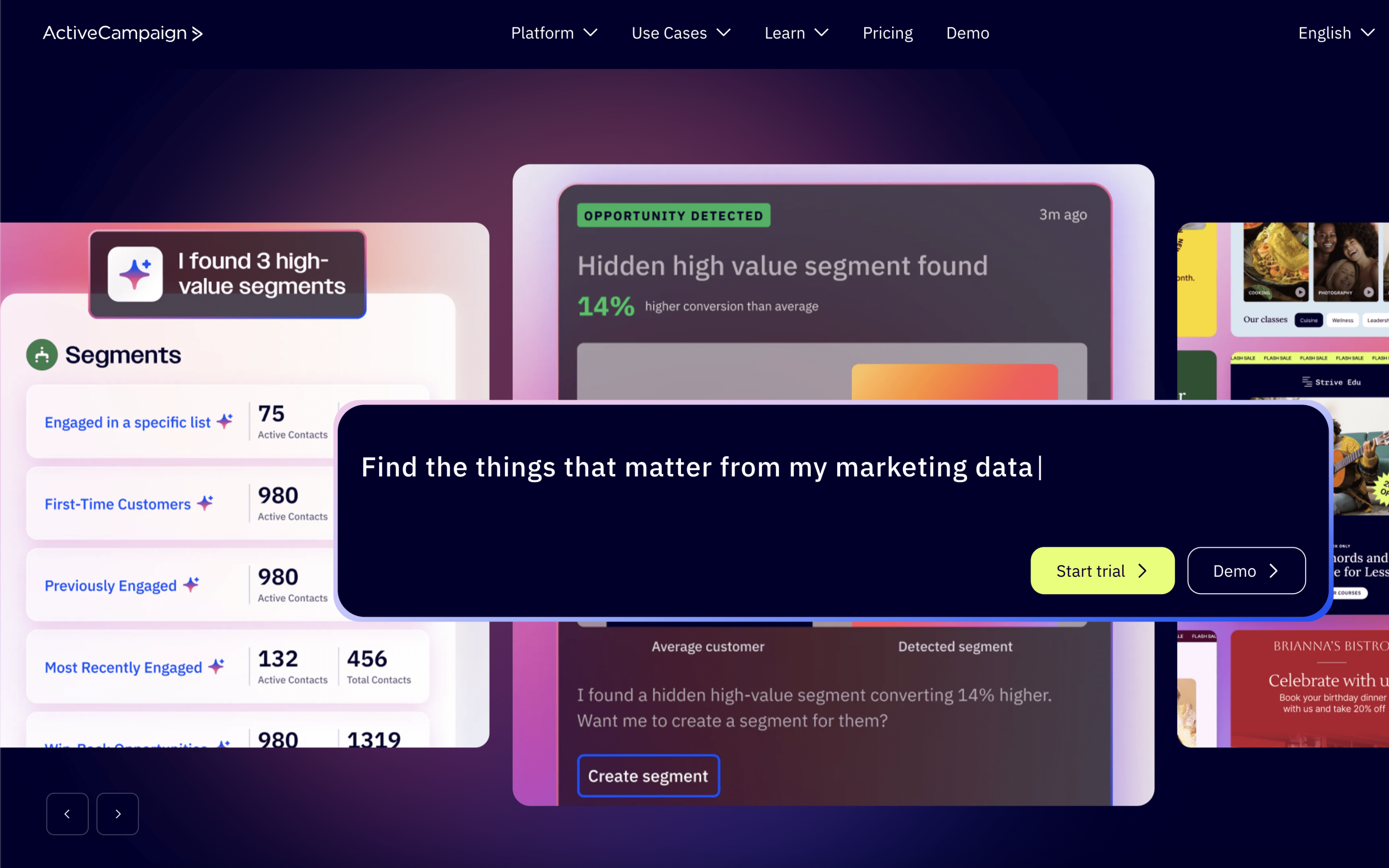
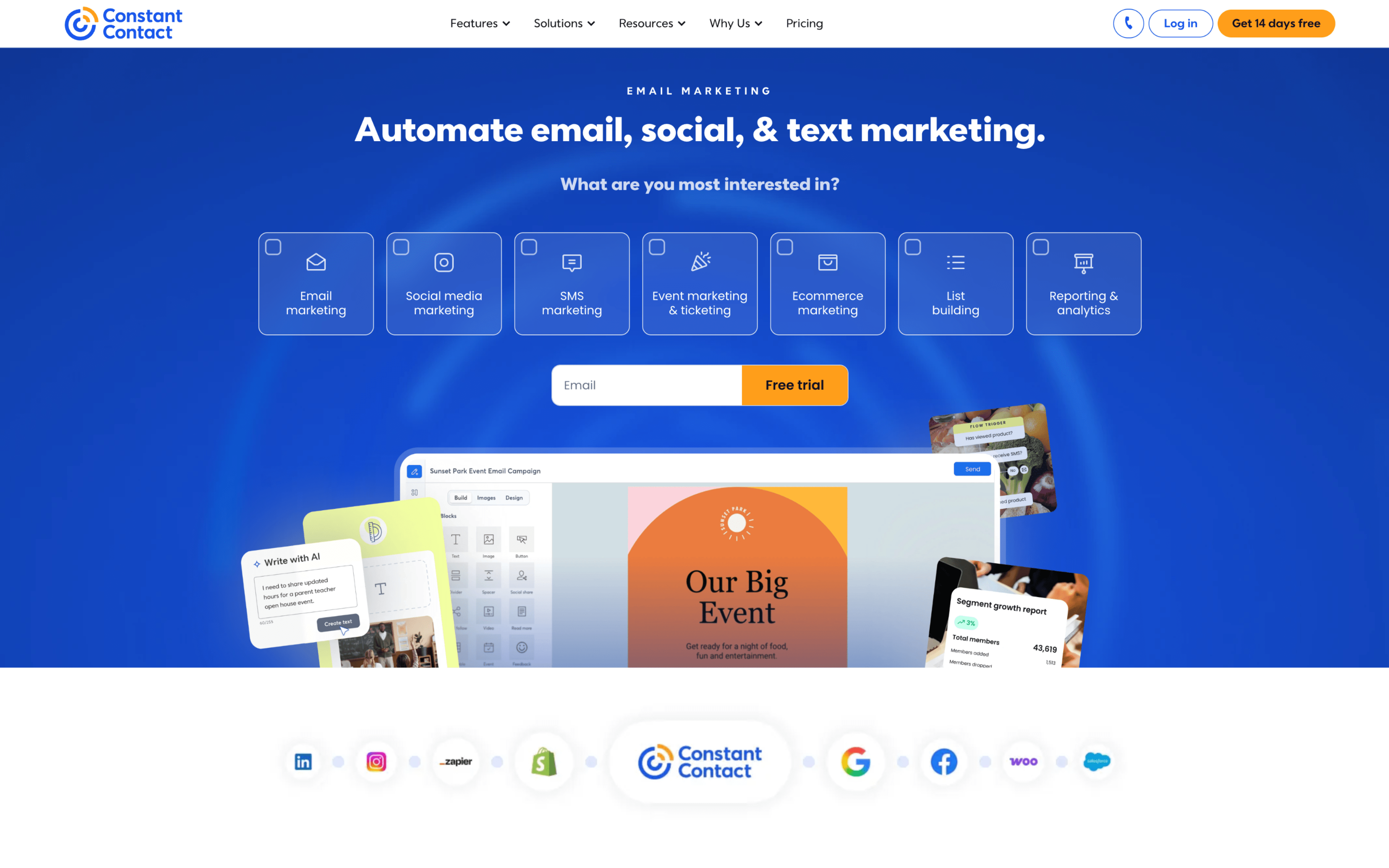
The biggest difference between ActiveCampaign and Constant Contact is how far each platform pushes automation and decisioning versus keeping everyday marketing execution straightforward. ActiveCampaign positions itself as an autonomous marketing platform designed to build and optimize cross-channel journeys with an advanced automation engine under the hood. Constant Contact emphasizes that email marketing can be easy, centering on quick creation, list-building, and light-to-moderate automation that fits common workflows.
That split is intentional: ActiveCampaign’s product bet is that richer customer data and more sophisticated logic should drive “next best” actions and orchestrated journeys across channels, so the system can reduce manual work while preserving granular control when needed. Constant Contact’s product bet is that removing complexity—through guided setup and approachable campaign creation—unlocks consistent execution, even when you’re not trying to model every behavioral edge case in a single automation map.
In practice, the stakes are operational. If your growth motion depends on deeply branched journeys, tighter targeting, and cross-channel orchestration, the platform’s automation depth and data-driven decisioning become central. If your priority is reliably producing on-brand campaigns, building your list, and running common automations without heavy configuration, simplicity and speed-to-send matter more. The rest of this page unpacks the tradeoffs around automation depth, channel reach, and ongoing setup overhead.